Your current locatio
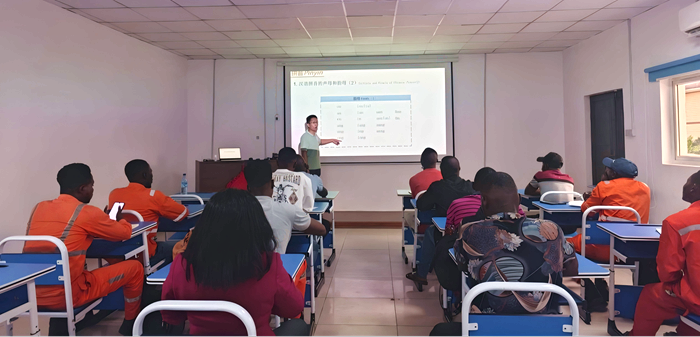
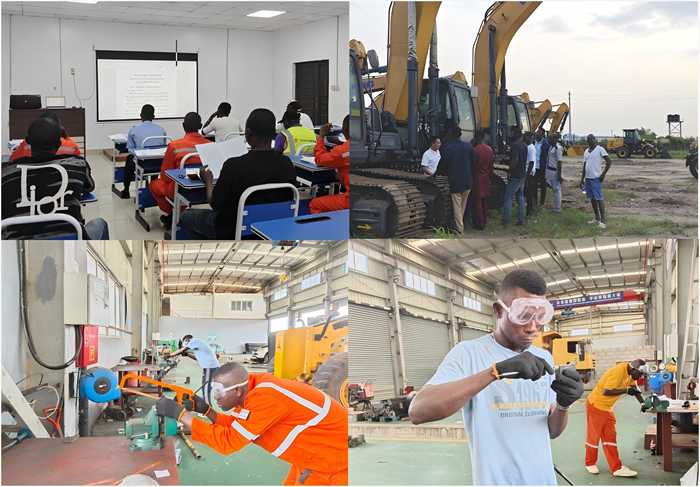
In Nigeria, there is a special classroom – “Center for Chinese Language and Professional Skills”in NJZC International Construction Nig. Ltd.It is not only a place where Chinese language and vocational skills are taught, but also the starting point of career dreams for a growing number of local youths. Since its establishment in December 2022, this Center, jointly built by Jiangxi College of Applied Technology and NJZC International Construction Nig. Ltd., has been offering Chinese courses, vocational skills training, and cultural experience activities to enhance the language ability and professional competence of local people, helping them integrate into the company, improve their job performance, and broaden their development prospects.
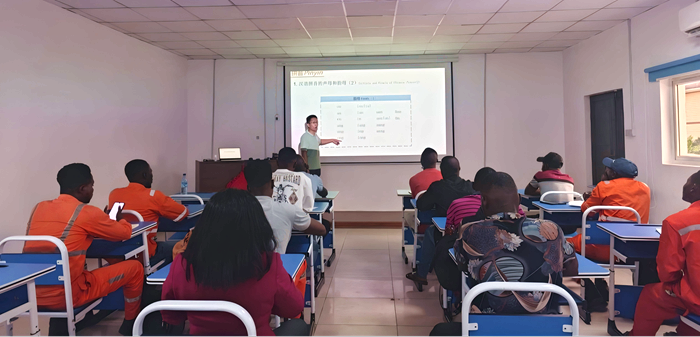
Most of the Center’strainees are local employees of NJZC International Construction Nig. Ltd.Their Chinese proficiency is generally low, and class participation was once lackluster. How to truly attract and help them became the primary challenge facing the teaching team.
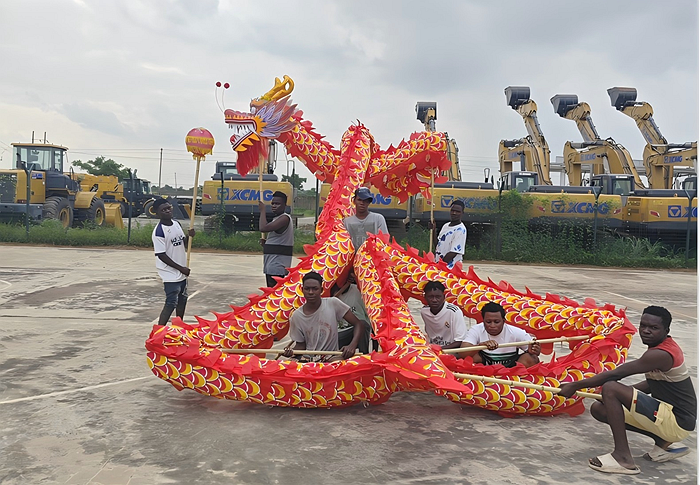
The turning point came from an attempt at cultural integration. Teacher Lu Wenchao found that Nigerian youths showed strong interest in traditional Chinese arts such as dragon dancing. Thus, a dragon dance team composed entirely of trainees came into being. With no professional coach, the teacher taught himself and then passed on the skills. With no fixed venue, they practiced under the scorching sun on clear days, and squeezed under the factory eaves on rainy days. When the colorful dragon truly “came to life” for the first time, the whole factory complex erupted in excitement. Those eyes that had once evaded Chinese class began to shine with unprecedented light.
Since then, more and more local employees have taken the initiative to learn Chinese. The teaching team seized the momentum and integrated cultural elements such as the Mid-Autumn Festival, Chinese films, andChinesecuisine into their lessons to spark students’ interest and enhance classroom appeal. The classroom gradually filled up, and trainees began to take the initiative to greet in Chinese: “老师好!” “你好!” “谢谢!” “明天见!”(“Hello, teacher!”“Hello!”“Thank you!”“See you tomorrow!”)
After some learning, the trainees were able to communicate in Chinese in the factory. A few months later, Peter, a mechanic, could hold a wrench, point at the roaring equipment, and say to his Chinese supervisorin Chinese: “老板,机器有点问题,要加水。(Boss, the machine has a problem. Need to add water.)” The sentence was simple, but with gestures, communication became smooth instantly. The supervisor remarked with feeling: “In the past, such critical operations relied entirely on gestures and English, and several small mistakes occurred. Now that the trainees can speak Chinese, communication is much smoother, and safety is better guaranteed.”
Language is the carrier of culture, and vocational skills are a hard power for personal development. In addition to Chinese teaching, the teachergoes deep into the factoryto investigate actual job needs, tailoring training content to the trainees’ daily work scenarios to ensure learning is applied and application reinforces learning. The teacherhasfocused on promoting a series of training programs such as “Chinese + Mechatronics”, “Chinese + Mechanical and Electrical Installation”, and “Chinese + Electrical Work”, closely integrating Chinese learning with professional skill improvement so that trainees can truly “comprehend, communicate, and complete tasks”.
Last September, the Centerorganized trainees to participate inthe 2025 World Vocational College Skills Competition in Africa,winning a bronze medal in the Mechanical and Electrical Equipment Installation and Operation & Maintenance category. The trainees stepped onto the international stage holding their medals, marking a glorious moment for the Nigerian Center.
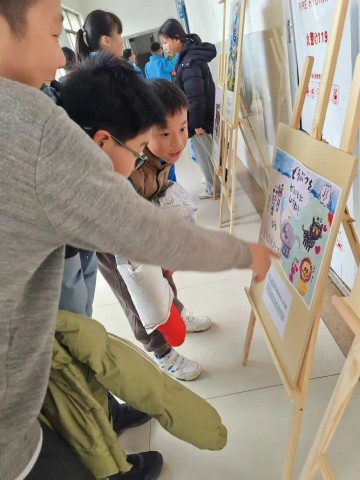
Cultural integration goes beyond the classroom. Seeing the trainees’ growing interest in learning Chinese, the Centersuccessively organized the “Chinese Culture Festival”, “Chinese Film Festival”, and a series of traditional festival exchange activities. Trainees experienced Chinese customs, tasted Chinese food, and shared them on social media platforms. These wonderful activities attracted family members, friends, company clients, community residents, and even local government officials. Almost imperceptibly, a “Chinese language craze” had quietly emerged in and around the Center.
As construction continues to advance, the Centerhas also taken on the function of corporate culture training, helping newly recruited local employees integrate into the company more quickly and understand the management models and cultural concepts of Chinese enterprises. A Chinese manager said: “Since thisCenterwas established, the sense of distance between us and local employees has significantly decreased. The employee turnover rate has dropped, the rapport between Chinese and Nigerian employees has improved, and work coordination has become much smoother.”
Today, the Chinese dragon danced by Nigerian trainees has become a vivid symbol of China-Nigeria cultural exchange. The “Center for Chinese Language and Professional Skills” in Nigeria has proven through action that the combination of language and skills can light up the career path of young people and also shorten the distance between enterprises and communities. Those trainees whose eyes were once full of confusion are now gaining direction, mastering skills, and stepping toward a broader future.